

Last updated: 2026-10-05
Yes, for most typists and programmers who use a keyboard for several hours a day, the Virtusx Phronesis is worth the upgrade over a standard mechanical keyboard. It pairs pre-lubed, hot-swappable switches with a low 2.0 mm actuation point, tri-mode connectivity (Bluetooth, 2.4 GHz, USB-C), PBT keycaps, and a built-in AI chip and microphone for dictation, translation, and meeting recording through the Virtusx AI App. It is positioned above entry-level mechanical boards, but it replaces a separate dictation tool and a second input device. Casual typists, gamers on a tight budget, or anyone who only needs a basic wired board may be better served by a standard mechanical keyboard, which can match the Phronesis on raw typing feel. The rest of this guide breaks down the specs and performance so you can decide for your own setup.
What Is the Virtusx Phronesis Keyboard?
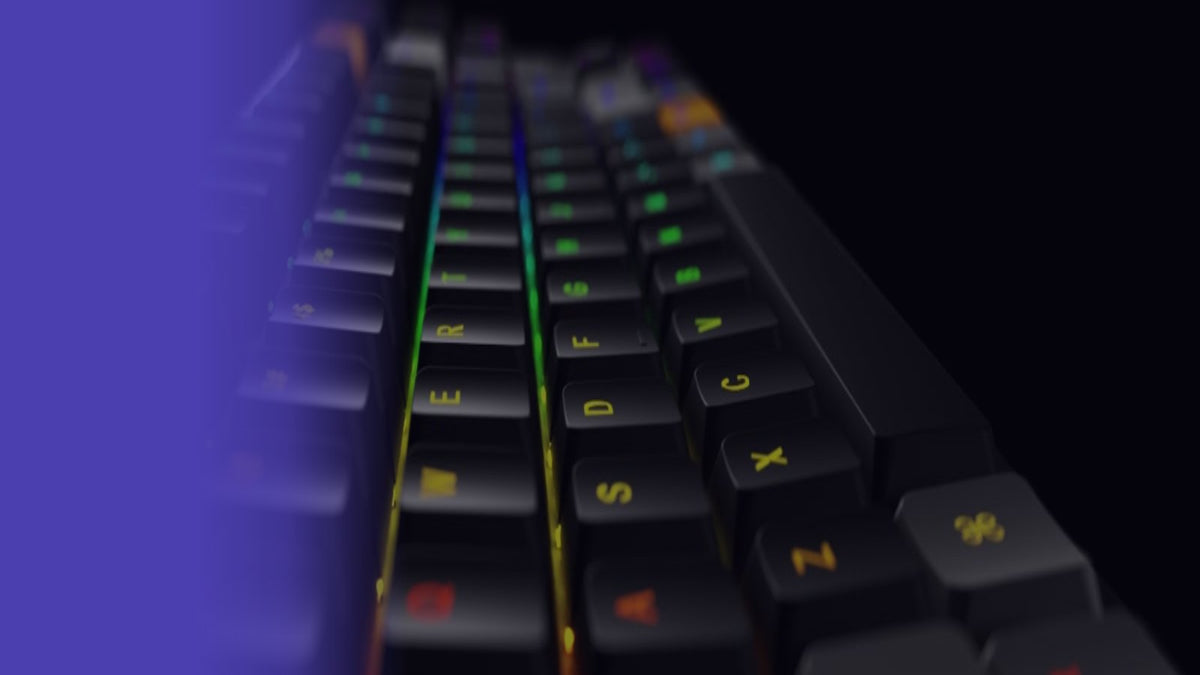
The Virtusx Phronesis (Amazon ASIN B0H4X4N6K5) is a wireless mechanical keyboard with an 87-key tenkeyless layout, available in black or white. It uses RK Misty Rain linear switches — pre-lubed, hot-swappable, rated for 50 million keystrokes, with a 40 gf actuation force, 2.0 mm actuation point, and 3.4 mm total travel. The keycaps are PBT with dye-sublimation legends and an anti-oil finish.
What separates it from a typical mechanical keyboard is the built-in AI chip and microphone. An AI Switch key toggles between normal typing mode and AI mode, where the navigation cluster becomes a bank of shortcuts: AI assistant, short writing, email reply, grammar check, article summary, meeting record, voice typing, voice translation, and a smart toolbar. A separate AI key opens the Virtusx AI App with a tap or starts a voice conversation with the AI chatbot when held. The keyboard also records online and in-person meetings through its microphone, though it isn't tied to a specific meeting platform like Zoom or Teams.
Connectivity is tri-mode: Bluetooth (up to 3 paired devices), a 2.4 GHz USB receiver, or wired USB-C, switchable from a mode switch on the back. It runs Windows 10/11 and macOS 12+ through the Virtusx AI App, available free on the download page. Full specs and photos are on the keyboard product page.
Virtusx Phronesis vs. Standard Mechanical Keyboard: Key Differences
A standard mechanical keyboard — think a board with Cherry MX or similar clone switches, no onboard chip, and either wired USB or basic Bluetooth — competes on typing feel. The Phronesis competes on typing feel plus onboard AI features and connectivity flexibility.
| Virtusx Phronesis | Standard Mechanical Keyboard | |
|---|---|---|
| Pros | Pre-lubed, hot-swappable switches out of the box; tri-mode connectivity; onboard AI dictation, translation, and meeting recording; PBT keycaps resist shine; 1000 Hz polling on wired/2.4 GHz | Wide switch and keycap choice; no companion app required; many options with per-key RGB |
| Cons | Bluetooth mode caps polling at 125 Hz; AI features require the Virtusx AI App and an internet connection for cloud models; heavier at 910 g | Switches often need manual lubing for best feel; fewer come with hot-swap sockets; no built-in dictation, translation, or meeting tools; connectivity usually limited to wired or single-mode wireless |
The Phronesis doesn't offer adjustable actuation points per key — the RK Misty Rain switches have a fixed 2.0 mm actuation point. The real differentiator against a standard mechanical board isn't a tunable switch; it's the combination of a good linear switch, flexible connectivity, and an AI layer that replaces a separate dictation or meeting app.
Spec Comparison Table
| Spec | Virtusx Phronesis | Standard Mechanical Keyboard |
|---|---|---|
| Switch type | RK Misty Rain linear, pre-lubed, hot-swappable | Varies — commonly Cherry MX or clones (linear, tactile, or clicky) |
| Actuation point | 2.0 mm (fixed) | ~2.0 mm on most Cherry MX–style switches (varies by switch) |
| Polling rate | 1000 Hz wired / 2.4 GHz, 125 Hz Bluetooth | Typically 1000 Hz wired; wireless models vary |
| Keycap material | PBT, dye-sublimation legends, anti-oil finish | ABS on budget boards; PBT on mid-range and above |
| Connectivity | Tri-mode: Bluetooth, 2.4 GHz receiver, USB-C wired | Usually wired-only, or single-mode Bluetooth/2.4 GHz |
Note: competitor figures above reflect widely published ranges for mechanical keyboards in general, not a specific model, since exact specs vary by brand.
Performance Comparison: Typing Feel and Speed
On raw typing feel, the Phronesis's RK Misty Rain switches are linear, meaning there's no tactile bump — the keypress is smooth from top to bottom, similar to a Cherry MX Red or Gateron Yellow. The 2.0 mm actuation point and 40 gf actuation force put it in line with common linear mechanical switches used across the market, so touch typists who prefer linear switches will find the feel familiar rather than radically different.
Where the Phronesis pulls ahead is total system responsiveness when wired or on the 2.4 GHz receiver, where it runs at 1000 Hz polling — matching high-end wired mechanical boards. Switch to Bluetooth, however, and polling drops to 125 Hz, which is standard for Bluetooth keyboards generally but noticeably slower than the wired/2.4 GHz modes. If you're doing competitive typing or gaming, stick to the USB-C or 2.4 GHz connection rather than B
Share:
Virtusx at CES 2025: A Milestone Achievement
Virtusx Phronesis vs MX Keys: Which Boosts Productivity?